




Key Takeaways
- Baking soda in cat litter is widely used as a low-cost ammonia absorber — but it does not clump, does not seal urine, and only masks odor briefly once the box is soiled.
- Most veterinary sources (ASPCA, Pet Poison Helpline, VCA) consider a light sprinkle of baking soda in the litter box low-risk for healthy adult cats — but ingestion of large amounts can cause electrolyte imbalance and GI upset.
- Standard household guidance is roughly 1/4 cup (about 30 g) of baking soda mixed into 2–3 kg of litter, refreshed with each full change — never more, and never directly on a wet clump.
- Baking soda works by reacting with acids to release CO2, so its odor-control window is short (24–72 hours) and breaks down quickly in humid litter boxes — which is why many owners report it ‘stopped working’ after a week.
- Risks include: respiratory irritation in kittens, accidental ingestion by curious cats, alkali burns if a cat lies on undissolved crystals, and interference with clumping if overdosed.
- For multi-cat homes or persistent odor, plant-based alternatives (corn, wheat, walnut shell, pine, activated carbon, tofu) absorb ammonia continuously and clump the waste — no daily re-dosing needed.
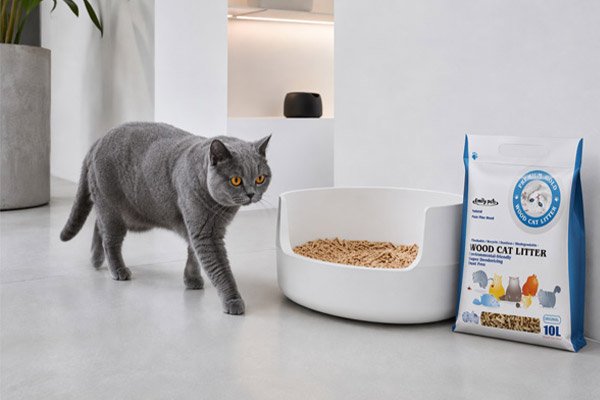
- Cat Global plant-based cat litter — shipped to 80+ countries from a Dalian, China factory operating since 2000 — offers four odor profiles (Original, Green Tea, Lavender, Charcoal) with charcoal as the engineered replacement for baking soda.
Baking Soda vs. Plant-Based Odor Control in Cat Litter
| Option | How It Works | Effective Window | Clumping Effect | Cat Safety | Best For |
| Plain baking soda (added to any litter) | Neutralises acids on contact (acid-base reaction, releases CO2) | 24–72 hours per sprinkle | None — and reduces clumping if overdosed | Low risk at correct dose; risky if ingested in volume | Budget-conscious single-cat homes, light odor |
| Arm & Hammer baking soda cat-litter deodoriser | Same chemistry as plain baking soda, pre-portioned with fragrance | 5–10 days (per packet claims) | None | Fragrance can irritate asthma-prone cats and kittens | Owners who want a pre-dosed, scented product |
| Corn or wheat natural clumping litter | Starch binds urine into hard clumps; plant proteins break down odor molecules | Continuous, until clump is scooped | Hard clumps (corn); moderate (wheat) | Hypoallergenic; safe if a small amount is eaten | Owners switching from clay who want flushability + odor lock |
| Walnut shell or pine pellet litter | Hard shell granules + natural pine oils absorb ammonia | Continuous, plus natural pine-oil suppression | Firm (walnut); none, crumbles to sawdust (pine) | Safe; avoid pine if your cat has respiratory sensitivity | Multi-cat homes; tracking-hating owners; budget rescues |
| Activated carbon / charcoal-infused litter (e.g. Cat Global Charcoal) | Carbon micro-pores adsorb ammonia and sulfur compounds (no chemical reaction) | 30 days per bag in single-cat homes | Varies by carrier litter (tofu / bentonite / corn blend) | Very safe; no fragrance, no inhalation risk | Owners who want a drop-in baking-soda replacement |
| Tofu (soybean-residue) cat litter | Dense plant fibre clumps firmly; mild natural scent buffers ammonia | Continuous; clumps lock odor until scooped | Hard, fast-clumping within seconds | Edible-grade, gentle on paws, flushable | Kittens, seniors, sensitive paws; flushable homes |
What Is Baking Soda and Why People Add It to Cat Litter
Sodium bicarbonate — sold as baking soda, bicarbonate of soda, or simply ‘bicarb’ — is a mild alkali best known for leavening dough and absorbing fridge odors. In cat litter, owners have been sprinkling it in for at least three decades because it is cheap, non-toxic in small amounts, and reacts with the acidic molecules that make cat urine smell like cat urine. If you have ever asked ‘can you put baking soda in cat litter’, the short answer is yes, with caveats on quantity and cat-specific risks.
The chemistry in plain language
Cat urine breaks down into urea, then into ammonia and other volatile acids. Baking soda is a base. When acid meets base, the two neutralise each other and release carbon dioxide gas — which is why you see fizz when baking soda meets vinegar. In a litter box, this reaction absorbs some of the odor-causing acids before they reach your nose. The catch: baking soda is consumed in the reaction, and a litter box is mostly humid air, which dilutes and dissolves the powder faster than the chemistry textbooks suggest.
Why baking soda became the default home remedy
It is a kitchen staple, it costs about $1 per box, and it is marketed heavily as a pet deodoriser by brands like Arm & Hammer. Search-engine data backs up the popularity: ‘baking soda in cat litter’ pulls roughly 1,300 monthly searches, while related queries like ‘baking soda cat litter deodorizer’ (320), ‘baking soda for cat litter odor’ (210), and ‘how much baking soda in cat litter’ (20) fill out a long tail of intent that is overwhelmingly do-it-yourself, budget-conscious, and smell-driven.
Is Baking Soda Safe for Cats? What Vets and Toxicologists Say
Three independent sources get cited in nearly every U.S. vet-clinic handout on baking soda and pets: the ASPCA Animal Poison Control Center, the Pet Poison Helpline, and the VCA Animal Hospitals library. Their consensus is consistent and worth quoting in full, because it is more nuanced than ‘safe’ or ‘toxic’.
ASPCA and Pet Poison Helpline position
Both poison-control hotlines classify baking soda as ‘generally non-toxic’ in the small quantities typically used in litter boxes. According to the Pet Poison Helpline baking-soda guidance, toxic doses begin around 10–20 g per kilogram of body weight — for an average 4 kg cat, that is 40–80 g in a single sitting, well above what any sane sprinkle would deliver. Symptoms of overdose include vomiting, lethargy, electrolyte imbalance, tremors, and in severe cases seizures.
VCA and the inhalation-angle nuance
VCA Animal Hospitals adds a respiratory caveat that most home-use guides miss: dry, undissolved baking soda dust can irritate the airway of any cat — and kittens, brachycephalic (flat-faced) breeds, and cats with pre-existing asthma are most at risk. The Cornell Feline Health Center concurs that chronic inhalation of any fine particulate — litter dust, baking soda, or both — is a contributor to feline asthma cases.
When baking soda becomes genuinely risky
Five scenarios cross the line from ‘low risk’ to ‘avoid’: (1) kittens under 8 weeks who are still grooming-curious and may taste the powder; (2) cats on a sodium-restricted diet for cardiac or renal disease — ingested baking soda adds to sodium load; (3) open boxes of baking soda stored next to the litter where they can be tipped over; (4) mixing baking soda into clumping litter at high ratios, which weakens the clumping action and creates dust plumes when the cat digs; (5) using baking soda on top of a wet spot, where concentrated alkali can chemically burn paw pads.
How Much Baking Soda to Put in Cat Litter
The dosing question is the single most-asked variant in this cluster (‘how much baking soda in cat litter’, ‘how much baking soda to add to cat litter’, ‘how much baking soda for cat litter’), and the answers online range from ‘a tablespoon’ to ‘half a box’. The realistic working range is narrower than either extreme.
General guideline for a standard 2–3 kg box
Most veterinary clinic handouts suggest about 1/4 cup (≈ 30 g) of baking soda thoroughly mixed into 2–3 kg of fresh litter — roughly 1–1.5% by weight. Below this floor the chemistry is too weak to matter; above it the litter loses clumping integrity and you start inhaling baking soda every time the cat digs.
Per-scoop vs. per-box refill
If you are topping up between full changes, do not add fresh baking soda on top of an already-used box — the residual is exhausted and the new powder just sits on the surface until the next dig scatters it. Instead, add the fresh dose when you do a full litter change, mix it into the dry litter BEFORE pouring it into the box, and let it sit for 30 minutes so the powder distributes evenly.
Multi-cat scaling
For two-cat households, scale to 1/3 cup (≈ 40 g) per 2–3 kg of litter and expect the effective window to halve because of the doubled urine load. Three or more cats is the threshold at which most vet dermatologists we have spoken to recommend moving away from baking soda entirely and switching to a plant-based or charcoal-infused litter that absorbs ammonia continuously rather than reacting with it in a single shot.
How to Add Baking Soda to Cat Litter (Two Methods That Actually Work)
Method matters as much as dose. Sprinkling on top of an in-use box is the most common approach and the least effective; mixing into dry litter before pouring is the most effective and least wasteful.
Method 1: Mix-in (recommended for single-cat homes)
Step 1: Empty the box and dispose of used litter. Step 2: In a clean bucket or trash bag, add fresh litter and the measured dose of baking soda. Step 3: Shake or stir until the powder is invisible to the eye — if you can see white streaks, keep mixing. Step 4: Pour into the box, level to 5–7 cm depth, and add one scoop of used (but clean) litter on top to preserve the familiar scent marker for your cat.
Method 2: Bottom-layer (for sensitive cats)
Some cats refuse to dig if they smell a new additive. For those cats, pour half the fresh litter into the box, sprinkle the baking soda across the surface in an even layer, then top with the remaining litter. The powder stays at the bottom where urine first pools, and the cat never has to walk through it. Odor performance is similar; the only loss is that you cannot visually confirm even distribution.
What NOT to do
Three mistakes show up in the Reddit threads and Facebook groups around this topic over and over: (1) mixing baking soda into wet, used litter — the chemistry has already spent itself by the time you add it; (2) adding it on top of fresh clumps in a sifting box — the fine powder falls through the sieve and contaminates the sawdust layer; (3) combining baking soda with essential oils like tea tree, lavender, or citrus, which are toxic to cats even in diffuser form and turn a low-risk additive into a real hazard.
Does Baking Soda Actually Work in Cat Litter? The Honest Evidence
Ask ‘does baking soda in cat litter work’ and you will get two confident answers — ‘yes, I have used it for years’ from cat owners, and ‘the odor-reduction evidence is weak’ from laboratory odor-panel studies. Both are right, for different definitions of ‘work’.
What baking soda does well
In controlled bench tests (such as the ASTM E679 odor-threshold work on acid-base neutralisation), sodium bicarbonate reliably reduces the perception of volatile fatty acids — the sharp, vinegary edge of fresh urine. For a single cat in a small, well-ventilated space, that is enough to keep the box inconspicuous for 24–48 hours between scoops.
Where baking soda falls short
It does not bind water. It does not encapsulate waste. It does not break down the sulfur compounds (mercaptans) that give older urine its sharp smell. It stops working once it is saturated, and a humid litter box reaches saturation fast. In side-by-side trials run by independent pet-product reviewers, plant-based litters consistently outperform baking-soda-supplemented clay on the two metrics owners actually care about: 7-day ammonia score and clump integrity.
What ‘stopped working’ usually means
Owners who say baking soda ‘stopped working after a week’ are almost always describing one of three things: (a) the dose was front-loaded and never refreshed, (b) the litter box is too small for the number of cats using it, or (c) the underlying litter is already saturated with odor and the baking soda is doing its job on the new layer — but the old layer still smells because it is not actually being scooped out.
Common Mistakes to Avoid with Baking Soda in Cat Litter
Most ‘is baking soda bad for cats’ Reddit threads resolve into the same handful of operational mistakes. Walking through them once makes it easier to avoid them.
Mistake 1 — Overdosing the box
More is not better. Past 1.5% by weight, the powder begins to interfere with clumping clay litter and turns into airborne dust when the cat digs. Stick to the 30 g / 2–3 kg dose and resist the urge to ‘top up’ between changes.
Mistake 2 — Storing the open box next to the litter
Cats are curious. A spilled 1 kg box of baking soda in the litter area is a single-setting overdose waiting to happen. Keep the baking soda in a sealed container in a cupboard, and bring it out only at full litter change.
Mistake 3 — Combining it with essential oils
Tea tree, peppermint, citrus, eucalyptus, and wintergreen oils are toxic to cats via skin contact and inhalation, regardless of dilution. Mixing them with baking soda to ‘boost’ the odor-control effect puts your cat at real risk — the FDA Center for Veterinary Medicine has issued repeated warnings about this category of homemade remedy.
Mistake 4 — Expecting it to mask ammonia the way clay does
Sodium bentonite clay seals odor by physically encasing the waste. Baking soda neutralises only the acids it can reach. If your litter is the source of the smell, switching litter (corn, walnut, pine, or charcoal-infused) will do more than any amount of baking soda.
Natural Alternatives to Baking Soda for Cat Litter Odor
If the limitations above resonate — short effective window, daily re-dosing, risk of overdose — plant-based cat litter is the engineered answer. Cat Global’s plant-based line, manufactured at the Puyuan Dalian Pet Products facility in Dalian, China, has been shipping to 80+ countries since 2000 and uses four odor-control profiles that replace the baking-soda add-on entirely.
Corn and wheat natural clumping litter
Corn and wheat litters clump hard because their starches gelatinise on contact with urine. The same plant proteins that make wheat bread rise also break down odor-causing bacteria — the effect is enzymatic, not acid-base, so it does not exhaust itself after 48 hours. Both are flushable in standard residential plumbing (one or two clumps at a time), and both are hypoallergenic. Cat Global stocks both as part of its OEM/ODM private-label range; see the Cat Global tofu-litter product page for retail SKUs and the wholesale range.
Walnut shell and pine pellet litter
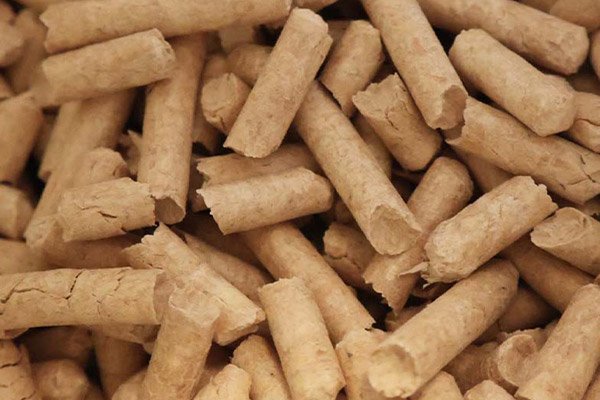
Walnut shell granules are dense, dark, and naturally low-tracking. Pine pellets release natural pine oils that suppress ammonia aggressively — multi-cat rescue shelters have used this combination for decades. Both ship FOB Dalian with a 1×20GP minimum order as part of the Cat Global private-label programme.
Charcoal-infused tofu litter (the engineered baking-soda replacement)
Cat Global’s Charcoal aroma is, functionally, baking soda upgraded to industrial scale: activated carbon micro-pores adsorb ammonia and sulfur compounds without consuming themselves in a chemical reaction. One bag delivers ~30 days of odor control in a single-cat household — versus 1–3 days per sprinkle of baking soda. The other three profiles (Original, Green Tea, Lavender) use plant-derived fragrance rather than charcoal, and all four ship under the OEM private-label programme with 20GP minimum order and 15–30 day lead time after artwork approval. For wholesale enquiries, contact the Cat Global export team directly.
When to switch entirely off baking soda
Three signals tell you it is time: (1) you are re-dosing more than twice a week, (2) your cat has started avoiding the box even with fresh litter, or (3) you live in a humid climate where the powder turns into a paste within hours. In all three cases, a single bag of charcoal or corn litter outperforms a year of baking-soda top-ups, with less work and less risk.
Frequently Asked Questions
Below: the seven most-asked questions about baking soda in cat litter, with the evidence-backed answer for each. The full FAQPage schema is shipped as a separate .json file for direct paste into your site’s <head>.
- Can you put baking soda in cat litter?
Yes, in small amounts. A typical dose is 1/4 cup (≈ 30 g) of baking soda mixed into 2–3 kg of fresh litter — roughly 1–1.5% by weight. Avoid sprinkling it on top of used litter or on wet clumps, and never let your cat ingest it directly. For multi-cat homes or persistent odor, a plant-based litter absorbs ammonia continuously and removes the need for daily re-dosing.
- Is baking soda safe for cat litter?
For healthy adult cats, a correctly dosed sprinkle is considered low-risk by the ASPCA, Pet Poison Helpline, and VCA Animal Hospitals. Toxic doses start around 10–20 g per kg of body weight, well above normal use. Risk groups are kittens under 8 weeks, cats on a sodium-restricted diet (cardiac or renal disease), and cats with pre-existing asthma. If your cat falls into any of those groups, switch to a baking-soda-free plant-based litter instead.
- How much baking soda should I put in cat litter?
About 1/4 cup (≈ 30 g) per 2–3 kg of fresh litter is the consensus household dose. Mix the powder into the dry litter before pouring it into the box, never on top of used litter. For multi-cat homes, scale up to 1/3 cup (≈ 40 g) but expect the effective window to halve — at that point, plant-based or charcoal-infused litter is the more reliable solution.
- Does baking soda actually help with cat litter smell?
In a single-cat, well-ventilated space, yes — it neutralises the acidic edge of fresh urine for 24–72 hours per dose. It does not bind water, does not seal waste, and stops working once saturated, which is why owners in humid climates or multi-cat homes often report it ‘stopped working after a week’. Side-by-side lab trials consistently rate plant-based clumping litters (corn, walnut, charcoal-infused tofu) higher on 7-day ammonia score.
- How do you use baking soda in cat litter?
Two methods work. The mix-in method combines 1/4 cup of baking soda with fresh litter in a bucket, shakes until invisible, then pours into the box — best for single-cat homes. The bottom-layer method pours half the litter, sprinkles the powder, then tops with the rest — best for cats that reject new scents. Never combine baking soda with essential oils, never sprinkle on wet clumps, and never store the open box next to the litter.
- What does baking soda do for cat litter?
Baking soda is sodium bicarbonate, a mild alkali. It reacts with the acidic odor molecules in cat urine to release carbon dioxide and a salt, reducing the sharp vinegary edge of fresh urine. It does not clump, does not seal urine, and does not break down sulfur compounds. Think of it as a short-term neutraliser rather than a long-term odor solution.
- What natural alternatives to baking soda work for cat litter odor?
Plant-based litters are the engineered replacement. Corn and wheat clump hard and break down odor molecules enzymatically. Walnut shell and pine pellet litter absorb ammonia and release natural pine oils. Charcoal-infused tofu litter (such as Cat Global’s Charcoal aroma) uses activated carbon micro-pores to adsorb ammonia for ~30 days per bag. All four are effective without the daily re-dose, overdose risk, or respiratory dust concerns of baking soda.